About Abia State University (ABSU)
Get All ABSU Updates HereAbia State University (ABSU) is a state-owned university located in Uturu, Abia State, Nigeria. Established in 1981 as Imo State University and renamed in 1991 following the creation of Abia State, it has grown into one of Nigeria’s leading state universities. ABSU offers a broad range of undergraduate and postgraduate programs across disciplines such as Medicine, Law, Engineering, Business, and Education.
- Established in 1981 – ABSU was originally founded as Imo State University and became Abia State University in 1991 when Abia State was created.
- Main Campus in Uturu – The university's primary campus and administrative headquarters are located in Uturu, with additional facilities in Umuahia and Aba.
- Wide Range of Academic Programs – ABSU offers undergraduate, professional, and postgraduate programs through colleges such as Medicine, Law, Engineering, Business Administration, Education, and Humanities.
- Strong Focus on Employability – The university is known for its entrepreneurship-driven philosophy, summarized by the slogan "One Graduate–Two Skills," which aims to equip students with both academic qualifications and practical vocational skills.
- Reputation for Professional Education – ABSU is particularly recognized for its accredited programs in Medicine, Law, and Optometry, and provides clinical training through the Abia State University Teaching Hospital in Aba.
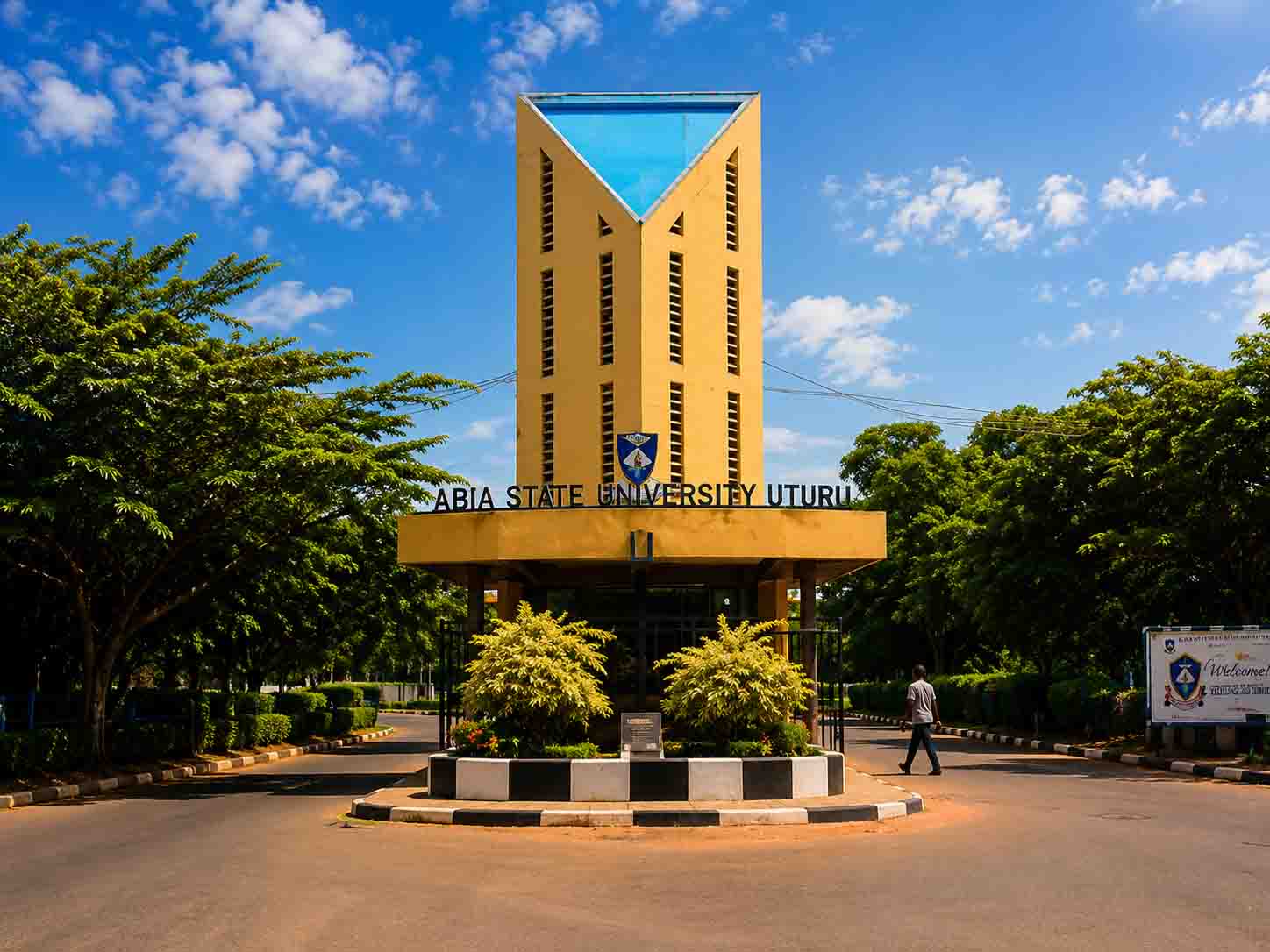
Abia State University (ABSU) is a reputable, state-owned Nigerian university located primarily in Uturu, Abia State. Established in 1981, it offers a wide range of undergraduate and postgraduate programs and is well-known for its mandate of producing graduates with multiple skills under the slogan “One Graduate-Two Skills”.
Abia State University (ABSU)
Overview
Abia State University (ABSU) is a public, state-owned institution of higher learning located in Uturu, Abia State, Nigeria. Guided by its motto, “Excellence and Service,” the university stands as one of the premier state-funded tertiary institutions in Nigeria, offering a vast array of undergraduate, professional, and postgraduate programs. ABSU has built a strong regional reputation for rigorous academic standards, medical training, legal education, and proactive student entrepreneurship.
History and Background
The origins of Abia State University date back to 1981, when it was established as Imo State University by the administration of Chief Sam Mbakwe, the Executive Governor of the old Imo State. Conceived as one of the earliest state-owned universities in the federation, it was designed to democratize access to higher education and foster accelerated development in the region.
At its inception, the university deployed a multi-campus framework: the core administrative and academic hub operated out of Etiti (in modern-day Imo State), while the Faculty of Law was anchored in the commercial city of Aba. Between 1984 and 1985, under the military administration of Major General Ike Nwachukwu, the institution consolidated its scattered campuses by relocating to its permanent site in Uturu—a strategic move that unified its academic structure.
The definitive turning point occurred in 1991 when Abia State was carved out of the old Imo State. During the division of state assets, the Uturu campus fell geographically within the boundaries of the newly created territory. Consequently, the institution was ceded to the local government and officially renamed Abia State University (ABSU), evolving rapidly as the academic flagship of the state.
Location and Campuses
ABSU utilizes a distributed campus model to cater to specialized professional programs:
- Main Campus (Uturu): Situated in the Isuikwuato Local Government Area, this sprawling campus serves as the central administrative headquarters and accommodates the vast majority of foundational colleges, faculties, registries, and residential halls.
- Umuahia Mini-Campus: Located within the state capital, this specialized campus primarily hosts advanced arms of agriculture and environmental studies.
- Clinical Training Grounds (Aba): The university’s medical pipeline connects directly to the Abia State University Teaching Hospital (ABSUTH) in Aba, providing clinical students with mandatory hospital-floor residency training.
Academic Structure
ABSU organizes its specialized academic departments into distinct Colleges:
- College of Medicine and Health Sciences
- College of Law
- College of Optometry
- College of Engineering and Environmental Studies
- College of Business Administration
- College of Agriculture and Veterinary Medicine
- College of Biological and Physical Sciences
- College of Humanities and Social Sciences
- College of Education
- College of Postgraduate Studies
Admission Information
Gaining entry into ABSU involves direct regulatory clearing tracks:
- Undergraduate Entry: Candidates must sit for the Unified Tertiary Matriculation Examination (UTME) handled by JAMB, select ABSU as their first choice, and meet the specific institutional and departmental cut-off marks.
- Screening Procedures: Validated UTME and Direct Entry applicants must register online through the official ABSU portal to participate in the mandatory institutional Post-UTME screening exercises.
- Postgraduate Processing: Advanced academic entries (PGD, Masters, and Ph.D.) are processed independently through the College of Postgraduate Studies based on previous degree classes and transcript reviews.
Notable Achievements
- Pioneering ODL and Remedial Frameworks: Serving as a historical pioneer in state-led higher education in southeastern Nigeria.
- Professional Professionalism: Cultivating top-tier programs in Law, Optometry, and Medicine that consistently rank highly in professional council accreditation scores.
- Core Entrepreneurship Mandate: Establishing a compulsory entrepreneurship curriculum designed to equip graduates with functional vocational and business skills alongside their primary degrees.
Student Life
Campus life at ABSU balances academic rigor with diverse extracurricular development. The university hosts active branches of the Student Union Government (SUG), professional student fellowships, and departmental clubs. The student experience is fortified by a central library system, active research laboratories, specialized counseling units, and the ABSU Business Resource Centre, which guides student-led startups and craft learning.
Leadership and Notable Alumni
ABSU’s alumni footprint spans top-tier tiers of Nigerian governance, law, entertainment, and global academia.
- Notable Alumni: Includes Ezinne Akudo (lawyer and Miss Nigeria 2013), Rochas Okorocha (former Executive Governor of Imo State), and Paschal Eze (renowned tourism consultant).
- Current Administration: The institution is under the administrative leadership of Professor Ndukwe James Okeudo, who serves as the Vice-Chancellor, working alongside Rt. Hon. Dr. Agwu U. Agwu as the Pro-Chancellor and Chairman of the Governing Council.
Frequently Asked Questions
When was ABSU established? ABSU was initially founded as Imo State University in 1981, but was re-established and renamed Abia State University in 1991 following the creation of Abia State.
Is ABSU a federal or state university? It is a public state university, owned, managed, and funded by the Abia State Government.
Where is the clinical training center for ABSU medical students? While foundational medical courses are taught at the campuses, clinical medical students undergo intensive residency training at the Abia State University Teaching Hospital (ABSUTH) in Aba.
Who is the current Vice-Chancellor of ABSU? The university’s current Vice-Chancellor is Professor Ndukwe James Okeudo.
Conclusion
Abia State University has successfully transitioned from its 1981 multi-campus roots into a highly consolidated, elite state university. Through periods of political restructuring and regional shifts, ABSU has preserved its core objective of “Excellence and Service.” By continuing to expand its professional pipelines in medicine, engineering, law, and business, the institution remains a key educational engine driving socio-economic progress within southeastern Nigeria.